

Security policy

Delivery methods and costs

Return policy
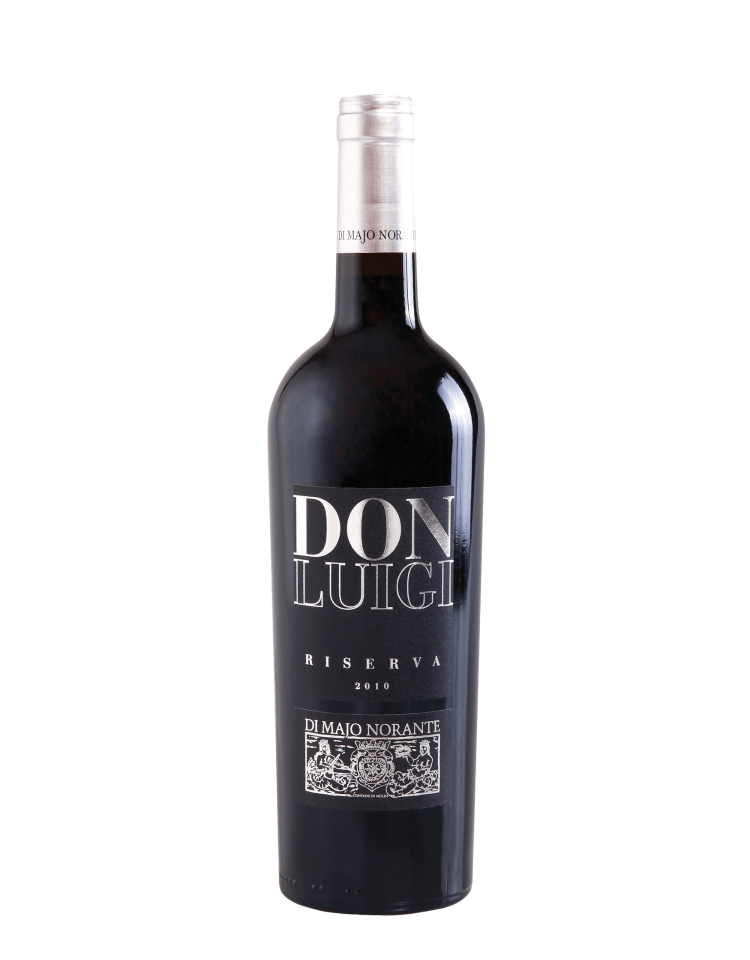
Don Luigi comes in a classic guise, with a color reminiscent of ink and with a structure that wraps around the sides of the glass like a velvet cloak. It is obtained from the pure selection of the best Montepulciano grapes. It is traditionally vinified with long contact of the must with the marc and aged in small oak barrels.
SIZE / WEIGHT: 0.75L bottles.
ORIGIN: Molise.
GRAPES: 100% Montepulciano .
ALCOHOL: 14% vol.
SERVING TEMPERATURE: Temperature between 12/18°C.
STORAGE METHOD: in a cool place away from sunlight.
SPECIFIC NOTES: Contains sulphites.
PRODUCER: Di Majo Norante - Campomarino CB.
Di Majo Norante has been producing wines from its own grapes since 1800, as evidenced by the cellars below the square and in the old family palace in Campomarino. The dedication to the cultivation of the vine is inherited from Alessio di Majo Norante and is planned today together with the passion for research and experimentation. Di Majo Norante produces its wines exclusively from the 123 hectares of the ancient feud of the Marquises Norante of Santa Cristina. The oenological philosophy of the Di Majo Norante company respects the traditional approach to the cultivation of the vine and the production of wine, in an attempt to preserve all the characteristics of the Mediterranean grapes. In Molise, wine has a tradition that dates back to the Samnites and the Romans, who introduced the cultivation of the vine. The production methods are those handed down from one generation to another in the southern Apennines, always linked to the values of the peasant world. The Masseria di Majo Norante is located north of the Gargano, in the Ramitelli district, in the countryside of Campomarino, where the clayey, partly sandy soil and the summer breeze combine to create a particularly favorable habitat. Alessio di Majo Norante, a stubborn and counter-current winemaker, sacrificed productivity and standardization of taste to the constant pursuit of quality and typicality, in the belief that southern vines are more suited to the soil and climatic conditions of the Molise countryside.